The Cygnus Loop
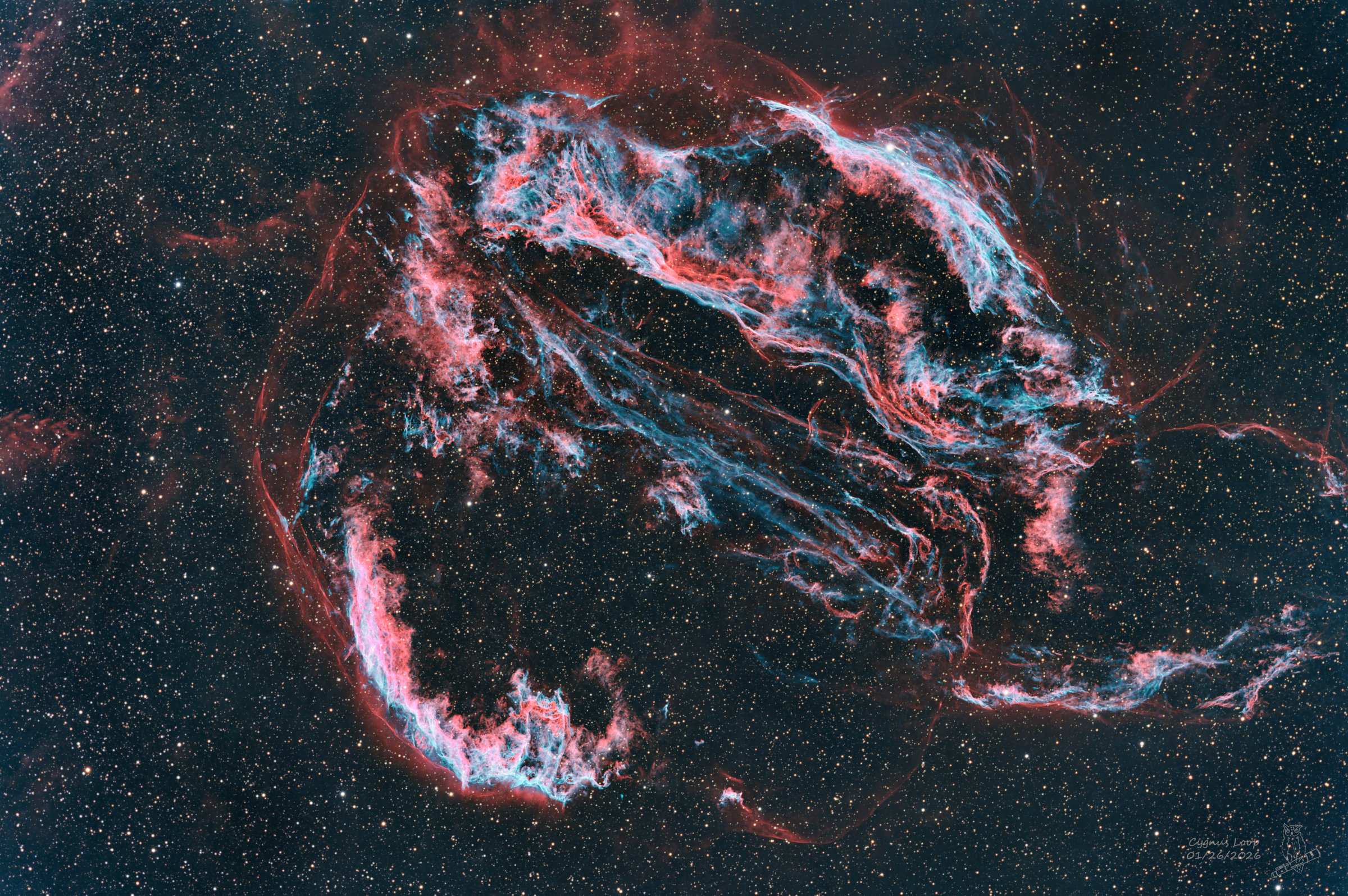
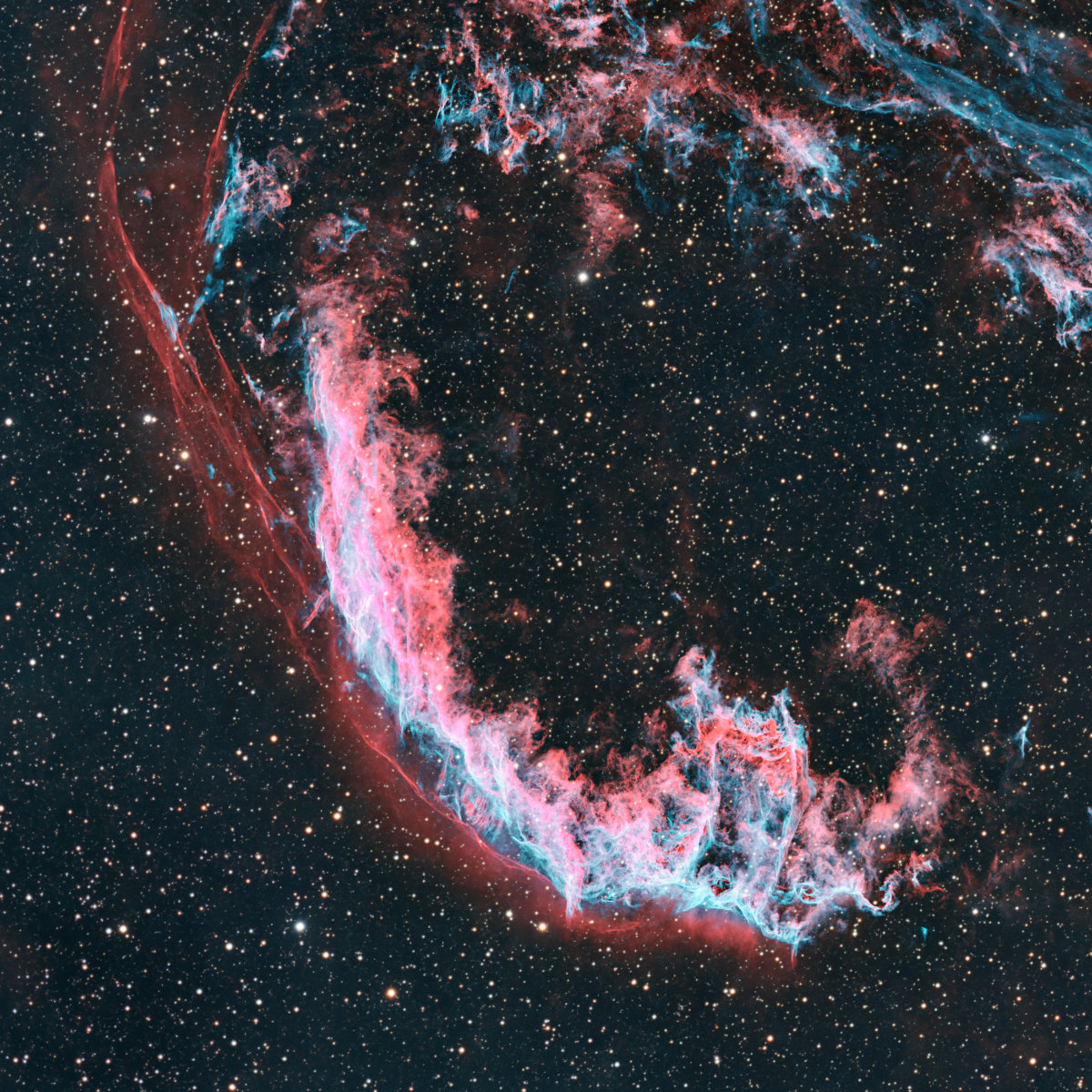
Better known as the Veil Nebula: the Eastern and Western Veils together
Summer sky · Supernova remnant · Cygnus, the Swan
Distance
~2,400 light-years
Size
~120 light-years
Exploded
~20,000 years ago
In our sky
6 full Moons wide
Best months
July – October
The story
What better way to spend a bitter cold January (for me, anyway) than processing my backlog of summer images?
This is the Cygnus Loop, better known as the Veil Nebula. It’s a very large supernova remnant in the constellation (…you must have guessed…) Cygnus, the Swan. When a star explodes in a supernova, it blasts its outer layers into space, so that we can take these awesome images.
We (referring to better minds than mine) think the star exploded about 20,000 years ago, roughly 2,400 light-years away. That’s about 14 quadrillion miles. The ever-expanding shell of gas and star dust is now about 120 light-years across, or about 705 trillion miles. Whew. From here on spaceship Earth it looks quite a bit smaller, but it still stretches across about six full Moons of sky.
The remnant is so large and bright that its different sections have their own names. My favorite is the Western Veil, the Witch’s Broom.
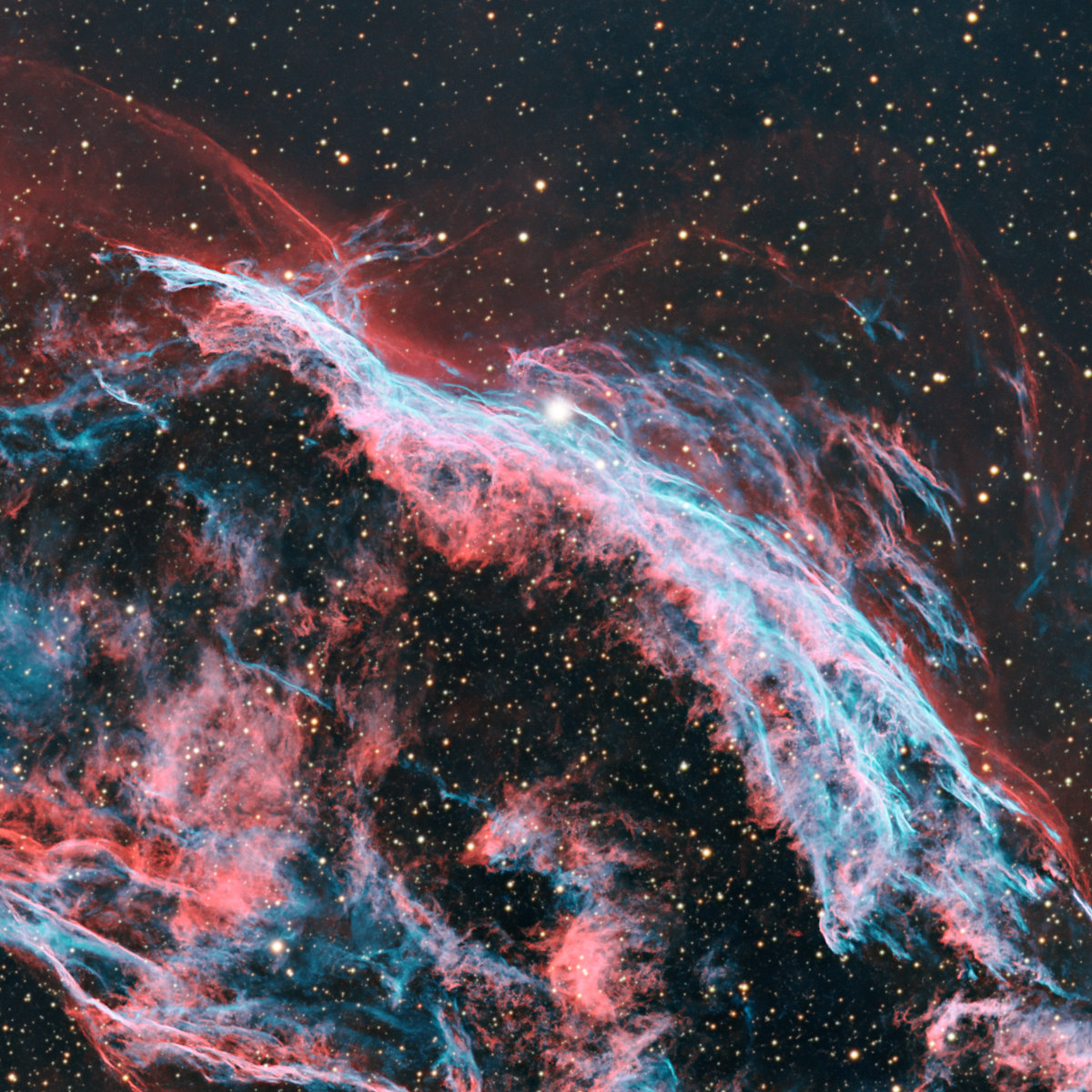
Look closely
Can you see the witch star riding on top of the wispy broom?
The named parts
How this image grew
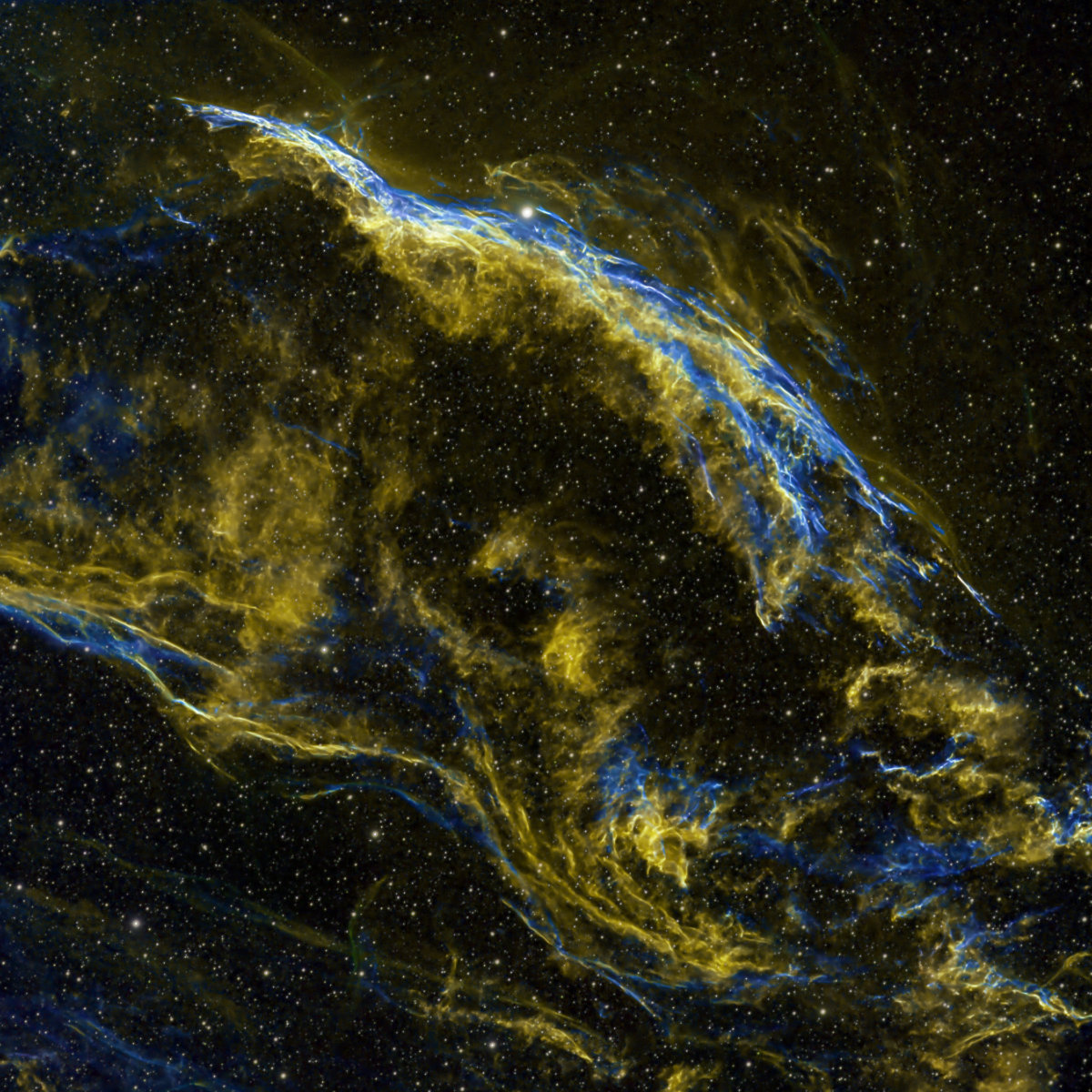
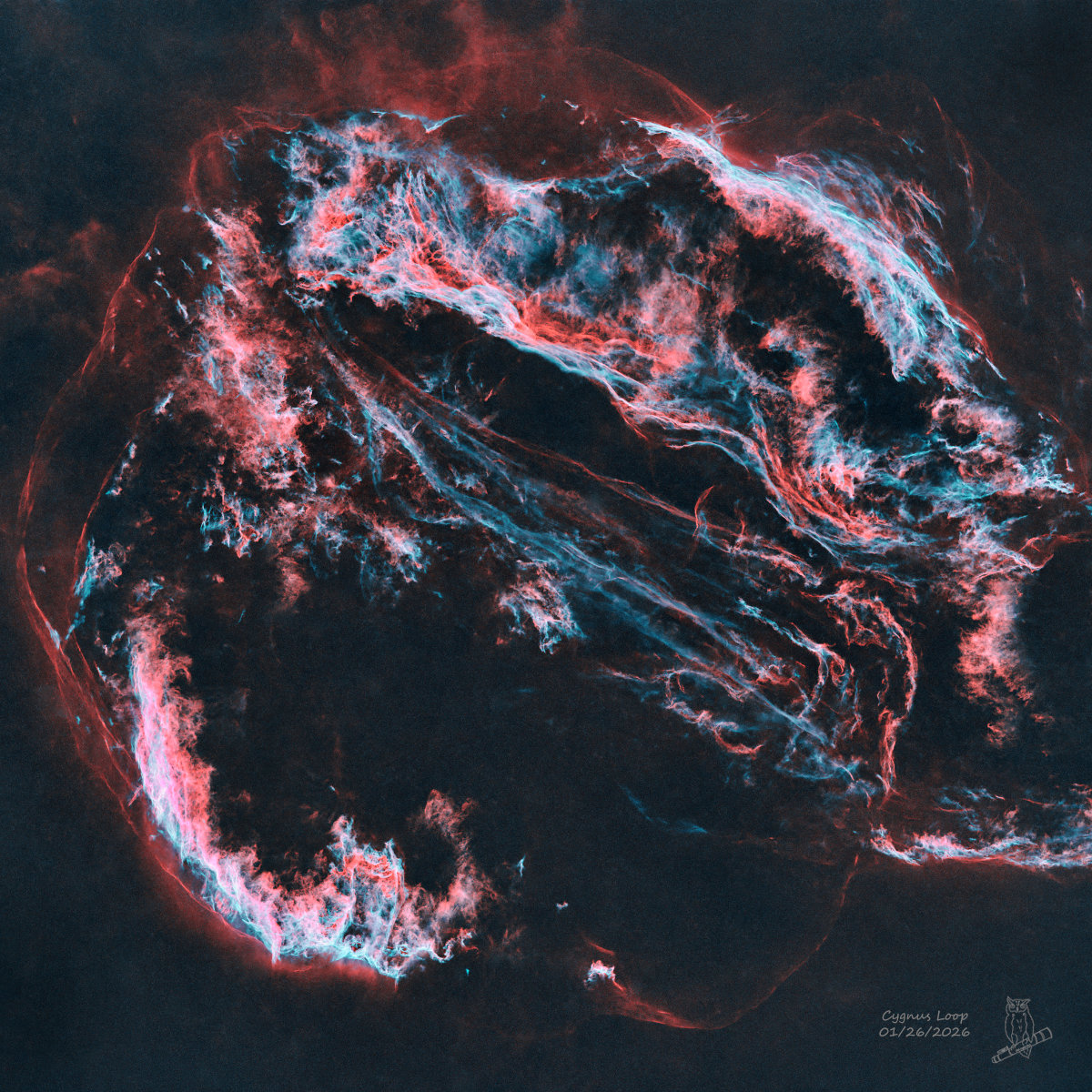
My first try at this target was just the Western Veil, in August 2023, with my Celestron C8. Its longer focal length gives more magnification and some nice detail. However, my processing skills needed improvement: zoomed in, there are large halos around the stars. Today’s version is a crop from a much wider view, so it trades some close-up detail for the whole loop, with cleaner stars and truer color.
Next time
I would reprocess this using some of my newer Pixinsight skills and perhaps try and blue and gold version.
How I made it
For the astro crowd
| Telescope | Askar FRA400 with f/3.9 reducer |
| Camera | ZWO ASI2600MM Pro (mono) |
| Filters | Antlia RGB, plus Hα, SII and OIII (3 nm) |
| Total time | 18 h 30 m |
| Where | New Jersey · Bortle 5 |
| Software | PixInsight + Affinity Photo 2 |